25+ Years of Surgical Excellence
650+ Successful Cochlear & Brainstem Implants
6,000+ Rhinoplasty & ENT Procedures
Restoring Sound. Refining Form. Rebuilding Lives.
Led by Dr. Bernard Wanna, a pioneer in Cochlear Implantation and advanced ENT surgery. We combine world-class French and American and Russian training with compassionate care in the heart of Lebanon.
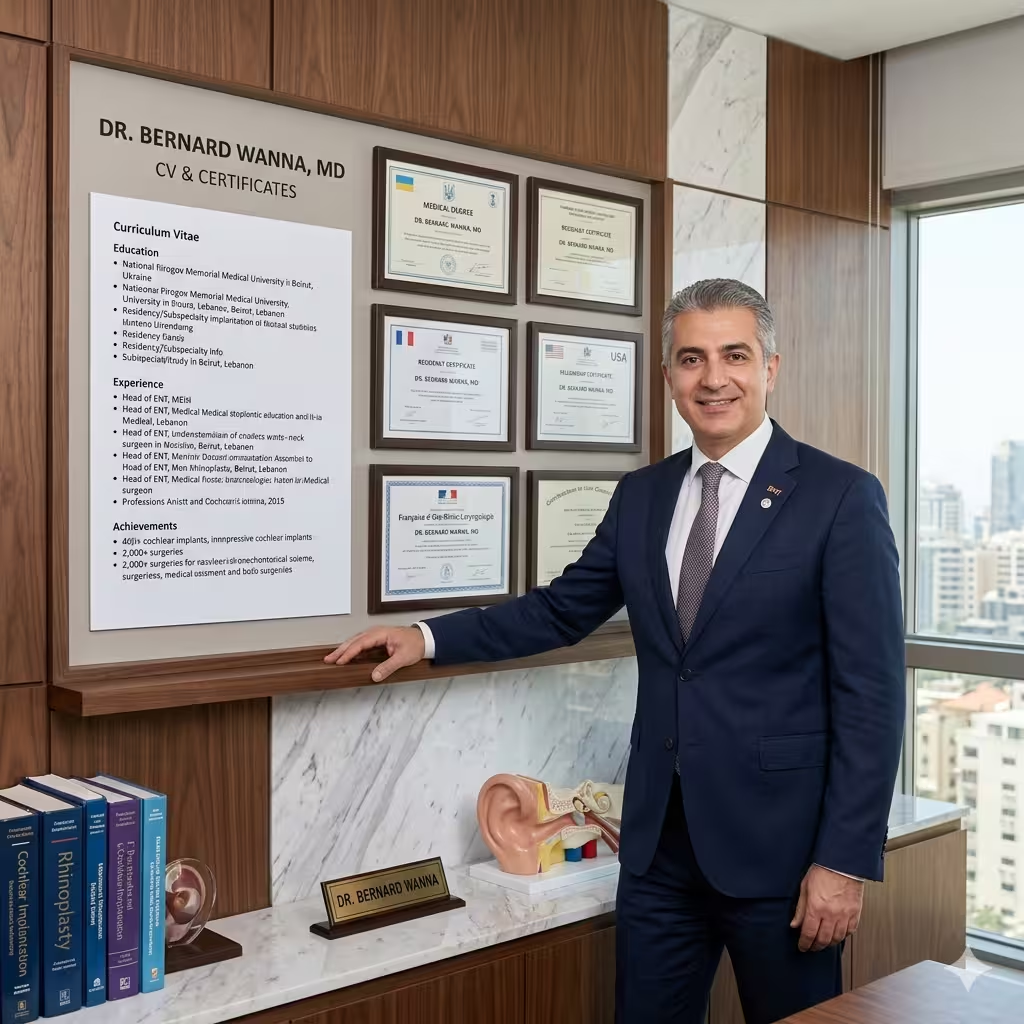
CERTIFICATES


DR. BERNARD WANNA, MD
Ear, nose, throat, and head & neck surgeon.
Member of the “Française d`Oto-Rhino-Laryngolologie et de Chirurgie de la face et du cou” society.
As of 2016, Dr. Wanna has performed more than 400 cochlear implantation surgeries in addition to auditory brainstem implant and bone-anchored hearing aids (BAHA) surgery.
He has also performed more than 2,000 rhinoplasty and other ENT surgeries
| Date of birth | August 19 |
| Nationality | Lebanese |
| Medical School | National Pirogov Memorial Medical University – Vinnitsa, Ukraine |
| 1990-1997 | |
| Residency | Vinnitsa, Ukraine Lille, France Miami, USA 1997-2001 |
| Subspecialty | Hearing Problems, Cochlear Implantation, Auditory Brainstem Implants, Rhinoplasty and hearing problems |
What hearing aids can we offer for a patient?
The hearing aids should be well positioned and the hearing behavior should be supervised to guarantee a good functioning. When constant modifications are conducted on the ears of the child, the hearing aids should adapt easily. For young children, we recommend using an ear contour because it is easier to manipulate and its removal from the cerumen is more effective. During the child’s growth, it is important to make a new nozzle which shouldn’t be so expensive. Hearing aids are available in cheerful colors which most children prefer.
Another option is the placing a hearing aid inside the ear canal, which is completely invisible.
The decision of which hearing aid is used is made by your physician.
Can a patient hear immediately after the operation?
No. Without the external transmitter part of the implant a patient cannot hear. The clinic will give the patient the external components about a month after the implant surgery in the first programming session.
Why is it necessary to wait 3 to 6 weeks after the operation before receiving the external transmitter and sound processor?
The waiting period provides time for the operative incision to heal completely. This usually takes 3 to 6 weeks. After the swelling is gone, your clinician can do the first fitting and programming.
What sounds can be heard with a cochlear implant?
You will probably hear most sounds of medium-to-high loudness. Patients often report that they can hear footsteps, slamming of doors, ringing telephones car engines, barking dogs, lawn mowers, and various other environmental sounds. You may hear some softer sounds too.
Can I get an X-ray?
Yes, X-rays are fine. Just remove the external equipment.
Can I get an MRI?
The simple answer is no. Some of the devices do have limited compatibility with MRIs, but you should always consult your surgeon to discuss if this option is available to you. In most cases, a high resolution CT scan will be sufficient.
Can I fly in an airplane?
Yes, you’ll need to carry your cochlear implant identification card with you for security as you will set off the security detectors. See Travel Tips for more information. Provided there are no surgical complications, most patients can resume airline travel within a week or two of surgery. However, it may be best to discuss this topic further with your implant surgeon.
Can I sleep with an implant on?
No, the implant likely will come off during sleep and could get damaged. It is recommended that the cochlear implant user remove the device prior to going to bed. If you live alone, please consider additional assistive listening devices for alerting purposes
How frequently do I need to come for appointments after I get an implant?
The cochlear implant is a lifelong commitment. Following surgery, the cochlear implant requires frequent appointments for programming or mapping. On average, the cochlear implant will require programming about every 3-6 months in the first year, and about every 6 months thereafter for optimal listening. For those patients who have had their implant 2-3 years, most of those patients can continue on an annual basis.
Can people with cochlear implants swim, shower and participate in sports?
Yes, people with implants can swim, shower and participate in virtually all types of sport activities when they are not wearing the external equipment. The only restriction relates to skydiving and scuba diving because significant changes in air pressure are not advised. Participation in all other athletic activities is unrestricted, although protective headgear is always recommended.
What is a cochlear implant?
A cochlear implant is a device that provides stimulation directly to the auditory nerve, bypassing damaged hair cells in the cochlea that prevent sound from reaching the nerve. An implant does not result in “restored” hearing for the recipient, but does allow him or her to perceive sounds.
Who is eligible to receive an implant?
In general, adults who have severe to profound hearing loss in both ears and have benefited only minimally from hearing aids may qualify as candidates for cochlear implantation. Children as young as 12 months of age who have severe to profound hearing loss in both ears and who demonstrate little progress in the development of auditory skills may also be considered candidates for some implant devices.
Are there risks in cochlear implant surgery?
Risk is inherent in any surgery requiring general anesthesia. However, most patients require only a one-day hospital stay.
DO YOU HAVE ANY QUESTION?
A Global Standard in ENT Treatments
WORKING HOURS
MON – FRI 9H00 – 16H00 PM
VISIT US
LEBANON, BSALIM, MIDDLE EAST INSTITUTE OF HEALTH (MEIH)
BOOK AN APPOINTMENT
00961-70997099